

Guidelines for Vision Screening in Missouri Schools
Recommended Screening Components
National Center for Children's Vision and Eye Health States, and even separate school districts within states, have varying vision screening procedures and protocols. The following information provides recommendations from currently available evidence-based sources, including the National Expert Panel to the National Center for Children's Vision and Eye Health, Prevent Blindness, and Bright Futures.

Optotype-Based Screening Approach
| Test | Ages | Tools | Optotypes | Pass | Notes and Tips |
|---|---|---|---|---|---|
| Distance Visual Acuity | 3, 4, 5, and 6 years | Tests of distance visual acuity:


| LEA SYMBOLS or HOTV letters response panels for playing matching game. 


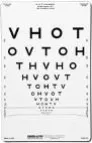
| 3yo – 20/50 line 4 and 5yo – 20/40 line 6yo and older – 20/32 line | Screen annually. Measure 10-foot screening distance between chart and child’s eyes. Place arch of child’s foot on the line when measuring the 10-foot distance, not heels or toes. Screen one eye at a time. Rescreen as soon as possible and no later than 6 months with the same screening tool. Refer to an eye doctor (pediatric optometrist, optometrist, pediatric ophthalmologist, or ophthalmologist) with experience examining young children. Use 9 x 14 Sloan Letters chart in an illuminated cabinet (e.g., ESV1200 below) or place on a wall in a well-lit room. 
|
| Distance Visual Acuity | Beginning at ages 6 or 7 years, depending on when children can identify letters in random order | Tests of visual acuity at 10 feet, using standardized format. If you draw a line around the outside of the optotypes, the line will resemble an upside down pyramid and not a rectangle. No more than 5 optotypes per line, unless using a 9” x 14” chart. Test of visual acuity should be 10 feet, not 20 feet, AND should have a 20/32 (10/16) line, not a 20/30 line. 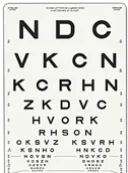
| Sloan Letters Response panel of Sloan Letters for students who use English as a second language and may need to match optotypes. 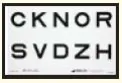
| More than half of optotypes on 20/32 line with each eye (e.g., 3 of 5 optotypes) | Bright Futures recommends vision screening for well-child medical visits at ages 8, 10, 12, and 15 years. Measure 10-foot screening distance between chart and child’s eyes. Place arch of child’s foot on the line when measuring the 10-foot distance, not heels or toes. Screen one eye at a time. Rescreen as soon as possible and no later than 6 months with the same screening tool. Refer to an eye doctor (pediatric optometrist, optometrist, pediatric ophthalmologist, or ophthalmologist) with experience examining school-aged children. Use 9 x 14 Sloan Letters chart in an illuminated cabinet (e.g., ESV1200 below) or place on a wall in a well-lit room. 
|
| Distance Visual Acuity | All ages beginning at age 3 years | Tests of visual acuity at 10 feet for threshold and critical line screening. AAPOS Basic Vision Screening Kit 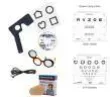
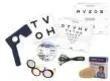
| LEA SYMBOLS® and Sloan Letters Also available with HOTV and Sloan Letters | Follow instructions in kits |
|
Instrument-based screening is appropriate for children ages 1 and 2 years, and as an alternative to optotype-based screening for ages 3, 4, and 5 years. Instrument-based screening can be used for children ages 6 years and older only for children who cannot participate in optotype-based screening. This age range may expand as high quality, peer-reviewed, published research emerges. All individuals, including community groups, screening children ages 6 years and older should follow this guideline until such research emerges.
Donahue, S. P., Baker, C. N., & AAP Committee on Practice and Ambulatory Medicine, AAP Section on Ophthalmology, American Association of Certified Orthoptists, American Association for Pediatric Ophthalmology and Strabismus, American Academy of Ophthalmology. (2016). Procedures for the evaluation of the visual system by pediatricians. Pediatrics, 137(1), e20153597. Retrieved from: http://pediatrics.aappublications.org/content/pediatrics/early/2015/12/07/peds.2015-3597.full.pdf
Instrument-Based Screening Approach
| Test | Ages | Tools | Optotypes | Pass | Notes and Tips |
|---|---|---|---|---|---|
| Screens for estimates of refractive error and eye misalignment | 1 year to 6 years | Welch Allyn® Spot™ Vision Screener 
Plusoptix S12 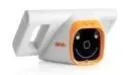
Righton Retinomax 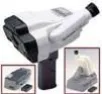
| None | According to device settings | Vision screening instruments do not measure visual acuity. Consult local eye care provider for referral criteria settings in programmable devices. Insufficient data currently exists to support instrument-based screening for ages 6 years and older. Monitor the Prevent Blindness website for additional approved devices: https://preventblindness.org/recommended-tools-and-tests/ |
| Near visual acuity | All | LEA SYMBOLS LEA NUMBERS near chart with cord. 
Sloan Letters near chart with cord. 

| Ages 3 to 6 years: Ages 6 years and older: | 3yo – majority of optotypes on 20/50 line with each eye separately or both eyes open 4yo – majority of optotypes on 20/40 line with each eye separately or both eyes open 5yo – majority of optotypes on 20/40 line with each eye separately or both eyes open 6yo and older – majority of optotypes on 20/32 line with each eye separately or both eyes open | Plus lens testing is not a near visual acuity test. Can conduct full threshold screening (starting at top line and moving down the chart) one eye at a time OR critical line screening with each eye individually, or with both eyes open. Hold cord at child’s temple. Ensure cord remains tight to prevent the child from moving closer to or farther away from the chart. |
| Stereoacuity | All | PASS Test™ 2. 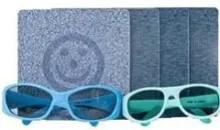
| NA | 3yo – pass Card B (no testing with Card C) 4yo – pass Card B (no testing with Card C) 5yo and older – pass Cards B and C
| If student wears prescription glasses for distance viewing, remove prescription glasses and screen only with polarized glasses. If student wears prescription glasses for near viewing, or full time, place polarized glasses over prescription glasses when screening. You may need a larger set of polarized glasses. If student wears prescription glasses and you do not know the reason, place polarized glasses over prescription glasses when screening. You may need a larger set of polarized glasses. If the child cannot see the 3-D image, then try conducting the test without the child wearing their glasses. Ensure no glare or shadow on cards. Hold cards with edges of fingertips. Tilt cards slightly backward – about a 10-degree tilt. |
| Color Vision Deficiency Screening | Upon entry to school system | Book with pseudoisochromatic plates. | Symbols and numbers | Follow manufacturer instructions | Replace book every 7 years; colors desaturate over time. Use cotton swab or brush for pointing or tracing the image as oil from fingertips will desaturate colors. |
| Occluders | 3 years to 10 years | Adhesive patches, 2-inch wide hypoallergenic surgical tape, or occluder glasses. 
| NA | NA | Unacceptable occluders include: Tissues, hands, paper or plastic cups, paper occluders, adults holding occluders over child’s eyes, and occluder paddles. |
| Occluders | 10 years and older | “Mardi Gras mask” or “Lollypop” occluders 

| NA | NA | Unacceptable occluders include: Tissues, hands, paper or plastic cups, paper occluders, adults holding occluders over child’s eyes. Hold “lollypop” occluders with handle toward temple, not chin. |