
Chapter 14: Soils Component
An Onsite Wastewater Treatment System Owner’s Manual
Chapter 14: Soils Component
Homes not served by public sewers rely on individual onsite or cluster wastewater treatment systems to treat and disperse domestic WA STEWATER. Household WASTEWATER contains human waste, dirt, food, toilet paper, soap, detergents, and cleaning products; which includes dissolved nutrients, microorganisms, pathogens (disease causing organisms) and solid particles. Improperly maintained wastewater treatment systems can allow these substances to become a health hazard by contaminating groundwater and/or bodies of surface water.
ONSITE WASTEWATER TREATMENT SYSTEMS (OWTSs) may have a variety of component types; however, soil is one component that all onsite systems have in common. Except HOLDING TANK systems do not use the soil onsite, but instead store SEWAGE until it is hauled off site for treatment. Wastewater treatment by the soil is the final layer of protection for public health, groundwater, and surface waters. After this final treatment step, treated water is safely recycled back into the hydrologic cycle.
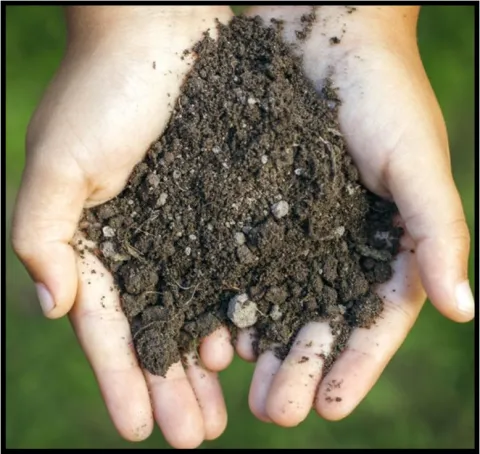
Soils are not all the same. Therefore, it is important to understand the soil’s properties and limitations for treating and recycling water. The best choice of system components and the proper design and installation of an OWTS requires an accurate evaluation of the site and soil properties. Soil properties can best be determined by a soil morphology evaluation although a percolation test may be accepted in some areas (contact your onsite wastewater ADMINISTRATIVE AUTHORITY for details).
How Soil Works to Treat Wastewater
Soil can be very effective in treating WASTEWATER when it is evenly dispersed into a properly sized area. In other words if the soil is not SATURATED, WASTEWATER will stay in contact with well aerated soil for a sufficient time to receive biological treatment. If WASTEWATER moves through the soil too rapidly, treatment will be incomplete when it reaches a groundwater table or a surface water body. If WASTEWATER moves too slowly, the continuing addition of more WASTEWATER can saturate the soil and limit the air available for biological treatment. This can cause WASTEWATER to surface on the ground. Therefore, the rate of water movement through soil is an important factor in wastewater treatment.
Soil is an unfavorable environment for bacteria and viruses found in wastewater. As wastewater moves through well-aerated soils, it is physically treated as waste particles and bacteria are filtered out. Viruses, which are smaller than bacteria, are not filtered out by the soil. Instead, positively charged viruses can be held by the negatively charged soil particles. Over time, these pathogens (disease causing organisms including bacteria and viruses) die due to changes in temperature, moisture, lack of food, and still others are preyed upon by a host of naturally occurring bacteria and other organisms present in the soil.
Soil also helps treat wastewater by removing some of its nutrients, mainly nitrogen and phosphorus. Nitrogen leaving a septic tank is usually in the form of ammonia. Most is converted to nitrate in the aerated soil below dispersal trenches. Nitrate can be used by growing plants; however, it also moves with groundwater and can contribute to health and environmental concerns. Phosphorus, as phosphate, is found in some detergents. It can be removed by minerals chemically binding the phosphate. Soils with more clay have a greater capacity to bind phosphate. The physical, biological, and chemical treatment processes of soil make water safe to re-enter the hydrologic cycle.
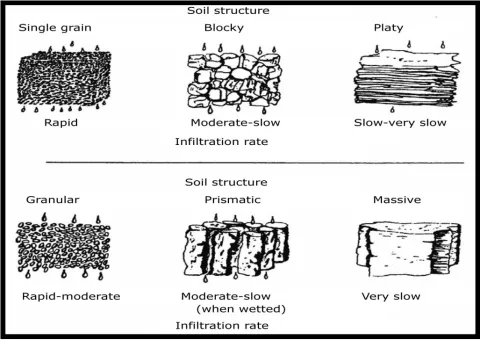
A bio-mat is a biologically active layer that develops at the bottom and sometimes on sides of dispersal trenches where wastewater from a septic tank disperses into the soil. It is a dark slimy layer consisting of wastewater solids, bacteria, and other organisms.
This bio-mat performs some important functions in the treatment of wastewater: (1) It helps filter wastewater solids; and (2) Organisms that live in and below the bio-mat compete with, and prey on, wastewater pathogens. In gravity distribution systems, wastewater spreads farther along trenches as the bio-mat develops and slows the movement of wastewater into the soil. The improved distribution and slower movement of wastewater into the soil helps maintain adequate air and time to complete treatment. However, if the soil treatment system is undersized or neglected, a bio-mat can develop into a clogging mat and cause the system to MALFUNCTION.
Soil Properties
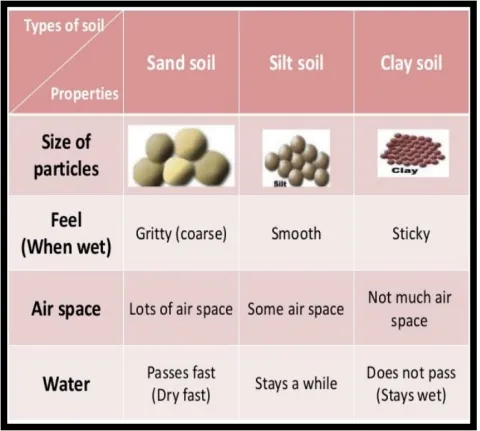
Soil texture is defined by the percentages of sand, silt, and clay size mineral particles. The smaller clay size particles have small pores and a relatively large surface area per unit volume which are good properties for filtering and treating wastewater. In contrast, sand size particles have larger pores and much less surface area which are good properties for moving water and air, but not as good for treatment. Silt sized particles are intermediate in size, treatment, and water/air movement. Loam is a term for soil having percentages of sand, silt, and clay so that each has nearly equal influence on soil properties. Loam and predominantly loamy soils have good properties for treating wastewater as well as for moving water away from an OWTS.
Some clayey soils have high shrink/swell potential, which means they expand when wetted resulting in slow water movement. It is not practical to use dispersal trenches and maintain adequately aerated soil for treatment in high shrink/swell clays; however, drip dispersal systems can work in these soils. A lagoon can also work where soils have high shrink/swell potential and there is sufficient space.
In addition to sand, silt, and clay, soil may contain organic matter and rock fragments. Between solid soil particles are pore spaces (porosity) that may be filled with either water or air. As the percentage of rock increases, treatment can be limited by the smaller volume of sand, silt, and clay sized particles due to the volume occupied by rock. Treatment can also be limited by either more restricted or too rapid water movement related to the rock content.
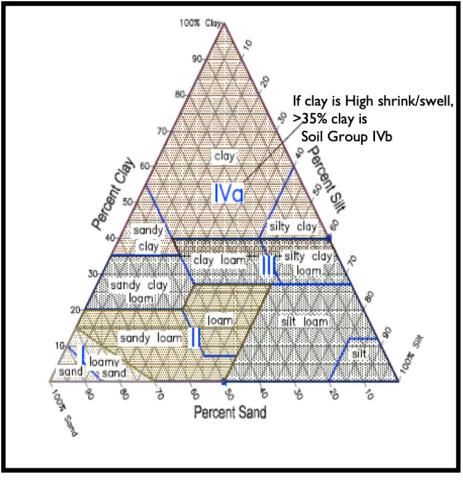
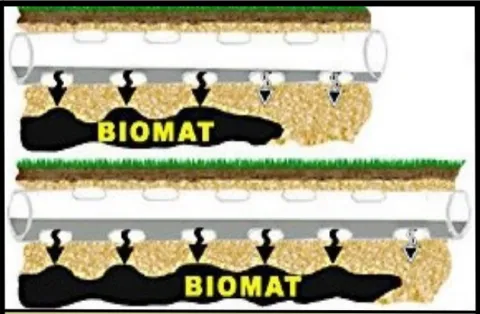
Soil structure is related to the grouping together of individual soil particles into peds, or aggregates. Soil structure can increase porosity and modify the effects of soil texture on the movement of water and air.
Other soil properties and site factors can influence the capacity for wastewater treatment. One consideration is vertical separation; the distance between the dispersal trench bottoms or drip lines and a limiting condition such as, bedrock, a restrictive horizon, or water table. The soil that is immediately beneath the dispersal system is considered the treatment zone and should be suitable or provisionally suitable with plenty of air in the soil pores. Two feet (2’) of separation is generally needed for a gravity dispersal system and one foot (1’) for an alternative system; however, more may be required for some soils or systems. Anything that limits the distance or time that wastewater is in contact with aerated soil can limit biological treatment. See Table 1 for some impacts.
Karst is a term for areas that may have permeable bedrock and features including sinkholes, caves, springs, and losing streams. In these areas groundwater that may be used for drinking water is more susceptible to contamination from a MALFUNCTIONING OWTS. Therefore, OWTS management, including proper OPERATION and MAINTENANCE is essential to assure safe treatment of wastewater and to protect groundwater.
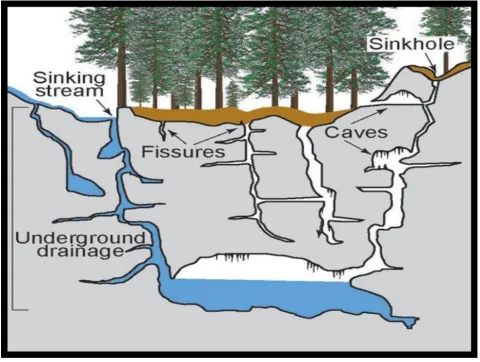
Table 1: Soil Characteristics
| Factor | Type | Impact |
|---|---|---|
| Topography | Level | Slower water movement away from OWTS and possible water table issues. |
| Steep | Potential erosion, increased groundwater movement, and not suited to lagoon construction. | |
| Water Gaining | Footslope, toeslope, etc., positions may be wetter because of runoff. | |
| Texture | Sandy | Rapid water movement limits treatment. |
| Clayey | Good treatment if sufficient air is present; larger areas are needed due to slower water movement. | |
| High shrink/swell clay | Very slow water movement and potential for surfacing wastewater. | |
| Rocky | ≥35 percent rock limits treatment; may either have slow water movement or allow rapid water movement. | |
| Structure | Fine to medium | Improves water movement and wastewater contact with soil. |
| Coarse | Less wastewater-soil contact; larger areas are needed. | |
| Weak, platy, or massive | Potential to slow or restrict water movement. | |
| Drainage | >48” from soil surface to water table | At least 24” with air-filled soil pores between trench bottom and water table promotes good biological treatment. |
| ≤36” to water table | May require OWTS design changes to assure treatment. | |
| Thickness | >48” from soil surface to bedrock | At least 24” of soil between trench bottom and bedrock needed for treatment. Note: At least 48” is needed in karst areas. |
| ≤36” to bedrock | May require OWTS design changes to assure treatment. | |
| Depth to Restriction | >48” from soil surface to restriction | 24” of soil above a restrictive horizon promotes treatment. Note: Groundwater is protected; surface waters could be at risk. |
| ≤36” to restriction | May require OWTS design changes to assure treatment. |
DID YOU KNOW?
In order to ensure individuals are properly trained, the Missouri Department of Health and Senior Services registers several types of ONSITE WASTEWATER TREATMENT SYSTEM PROFESSIONALS. For more information about installers, onsite soil evaluators, and onsite system inspectors/evaluators please go to Wastewater Professionals[NEEDS LINK] at http://health.mo.gov/living/environment/onsite/professionals.php[NEEDS LINK]
Design and Construction
In order for the soil to properly treat wastewater, the type of OWTS and its design and construction must be suited to the site and soil properties/limitations. General soil information is readily available online from the Web Soil Survey: https:// websoilsurvey.sc.egov.usda.gov/App/ WebSoilSurvey.aspx. However, the Web Soil Survey information is not detailed enough for OWTS selection and design. A site specific evaluation might find soil that has more limitations than the Soil Survey map unit; or, an experienced soil evaluator might find an area with better soil properties for wastewater treatment.
The first step in OWTS design is to have the site and soil evaluated according to minimum state and county standards by a soil morphology evaluator or percolation tester. Soil morphology evaluations are preferred, and may be required, because of the more detailed information provided. The information available in a soil morphology report is used to select, design, and install the most appropriate OWTS for a particular site.

Percolation tests measure the actual rate that clean water moves into the soil and therefore provide less detail about the soils. These tests results are influenced by soil moisture conditions at the time of the test. Percolation tests offer little to help determine the soil’s treatment capacity and ultimately limit design options.
The number of pits needed for a soil morphology evaluation depends on the size of area being evaluated and whether the landscape is uniform or variable. At least one pit must be dug to 48 inches deep or deeper or to bedrock if it is shallower than 48 inches. One face of each pit is evaluated and reported in a soil profile description that details the depths of soil horizons (layers) and the soil texture and soil structure by horizon. The depth to any limiting factor, such as bedrock, or a restrictive horizon is noted. Soil and site factors are classified as suitable, provisionally suitable, or unsuitable. When factors are classified as provisionally suitable or u n s u i t a b l e , r e q u i r e m e n t s o r recommendations are given to help assure the appropriate design and construction of an OWTS.
An example might be the requirement to install a curtain or interceptor drain to divert groundwater from flowing downslope into the soil treatment area. Some limitations require further study or a professional engineer designed OWTS.
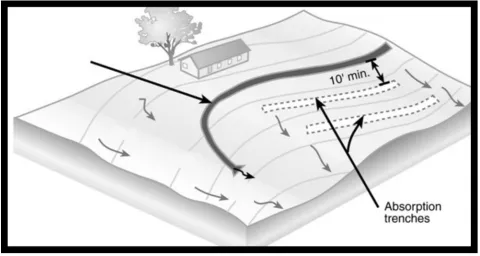
Available space is the combined land used to install an OWTS and the land reserved for a replacement system. Available space is another factor that is classified. The horizontal separation distance or setback requirements apply to the soil treatment system. Setback distances help protect private drinking water wells, lakes, streams, and adjoining properties. Setback distances can be considered as a factor of safety. When a required setback cannot be met, a variance may be granted by the onsite wastewater ADMINISTRATIVE AUTHORITY; however, improved pretreatment and/or distribution is typically required to assure the protection of public health.
Based on the site and soil evaluation and the minimum construction standards, soil treatment system design requirements and options include, but are not limited to, consideration of:
- Design flow – the minimum requirement is to design for estimated maximum daily flow and is intended to provide a factor of safety. When an OWTS design is based on actual flows, a safety factor is needed.
- Pretreatment component(s) – if the soils have limited treatment properties, aeration or alternative pretreatment systems can help assure adequate treatment.
- Distribution type – gravity, dosed, pressure distribution, drip dispersal.
- Dispersal system depth – soil treatment can be improved by maximizing vertical separation to bedrock, water table, or other limiting condition.
- Size of dispersal area – exceeding the minimum size can extend the life of the system.
- Soil treatment area length – on sloping sites, soil treatment systems that are longer along the ground surface contours can help maintain needed vertical separation.
The minimum soil treatment system size is based on the design flow and the soil application rate from the soil evaluation report. The registered soil evaluator assigns soil application rates, generally by horizon, for conventional and alternative soil treatment systems. The soil loading rate represents the amount of wastewater in gallons per day per square foot that can be applied to the soil. To assure an OWTS does not exceed the soil’s capacity to treat and move water, the lowest rate between the soil surface and twelve inches (12”) below the trench bottom or drip lines is used. However, any limiting factors that may be more than twelve inches (12”) below the system should be considered.
OWTS construction must be done when the soil is dry enough to crumble to avoid soil compaction and smearing of the trench surfaces. When backfilling the trenches, it is important to mound the backfill slightly so that after it settles, no depression remains to collect surface water and add to the hydraulic load on the system. On some sites, it may be necessary to construct a curtain drain to intercept groundwater to protect the area from that additional load. Also, surface grading must divert all storm water away from the system.
DID YOU KNOW?
Installing a soil treatment system that is larger than required by the minimum standards can increase the design safety factor and extend the useful life of the system.
Maintenance
Regular MAINTENANCE is essential for getting the best performance from your soil treatment system. If any pretreatment component is undersized or its MAINTENANCE is neglected, solids can flow into the soil treatment system. These solids can clog the soil where wastewater is dispersed or clog the pressure distribution network or drip irrigation lines. If clogging of the soil treatment system occurs, wastewater can surface onto the ground or backup into the house, where it exposes people and animals to disease-causing organisms. Replacement of a damaged soil treatment system can cost many times more than the cost of routine system MAINTENANCE. To prevent a costly MALFUNCTION, it is important to inspect your OWTS pretreatment and distribution components regularly and have them serviced as suggested by the installer and/or manufacturer.
Although soil treatment system MAINTENANCE is necessary, it’s not complicated. Regular attention and upkeep of the soil treatment area can assure the system operates properly and any problems with the system are detected early. When any problem is observed, it should be analyzed and corrected as early as possible as corrective actions can extend the useful life of your soil treatment system and help protect your family’s and community’s health.
Grounds Keeping
During the growing season, the use of water and nutrients by plants fulfill an important role in the soil treatment of wastewater. Locally hardy grasses are recommended because they are tolerant of Missouri’s changing weather and soil moisture. Mowing the grass regularly and preventing brush growth in the soil treatment area is important and one of the easiest MAINTENANCE tasks. Tall grass, weeds, or brush can mask problems that when detected early might be corrected before a costly repair or replacement system is needed.
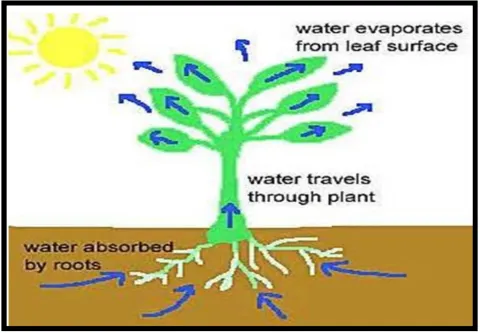
Existing trees are generally not a problem, though planting new trees is not recommended. Some trees, like willows, can clog systems with their roots and should not be near an OWTS. The OWNER should always be aware of their system’s function and check for wastewater surfacing at least once per year, and more often in wet years.