
Chapter 13: Cluster Systems
An Onsite Wastewater Treatment System Owner’s Manual
Chapter 13: Cluster Systems
Over the past few decades Missouri and the nation have made significant strides in addressing WASTEWATER treatment needs in communities. However, WASTEWATER treatment needs still remain, especially in small, rural communities and developments. Many of these older developments were not planned with sewage treatment in mind; in fact, several have direct SEWAGE discharges or connections to common drains due to a lack of such planning. These communities often cannot solve their sewage treatment problems using individual onsite systems due to small lot size or poor soil conditions. A centralized wastewater system may not be a good solution due to limited operation expertise and funding.
Cluster systems can bridge the gap in small communities and developments where neither individual ONSITE WASTEWATER TREATMENT SYSTEMS nor centralized wastewater systems are feasible. Cluster systems are an important option for wastewater management in situations where onsite systems are impractical or where connecting to centralized wastewater systems is not financially or technically feasible. Cluster systems can also be used to address capacity issues with large centralized wastewater systems.
How a Cluster System Works
There are three general types of wastewater systems: individual onsite, centralized, and cluster. Each type of system can consist of various combinations of wastewater collection, treatment, and dispersal technologies. While individual onsite systems serve one household or property and centralized systems serve large, high-density communities, cluster systems serve an intermediate number of residences or establishments. Cluster systems collect and treat wastewater from at least two residences or establishments, but less than the whole community. A typical cluster system serves 2 to 10 residences.
The difference between the three types are:
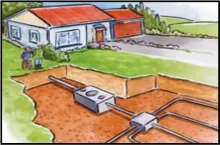
Individual Onsite Wastewater Systems: Onsite systems collect, treat, and disperse wastewater on an individual property. Onsite systems are associated with low-density communities and developments and generally consist of a treatment device and a subsurface dispersal system.
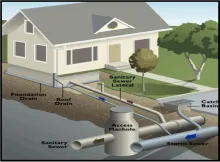
Centralized Wastewater Systems: Centralized systems are associated with highdensity communities and developments such as cities and commercial areas. They generally consist of a collection system that gathers and transports WASTEWATER to large centralized treatment facilities where it is usually returned to surface waters.
Cluster Wastewater Systems: Cluster systems can serve a small to large number of connections. Smaller cluster systems serving a few buildings resemble onsite systems, while large cluster systems serving hundreds of structures are similar to centralized systems. Small cluster systems generally disperse WASTEWATER in subsurface dispersal systems.
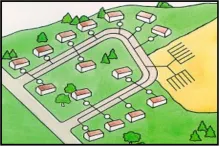
This chapter focuses on cluster systems that disperse treated WASTEWATER into subsurface soil treatment systems. Cluster systems may include any of the technologies that are discussed in the component chapters of this manual except for lagoons and HOLDING TANKS.
Cluster systems may collect and transport all of the raw SEWAGE from individual structures to a single location for treatment and dispersal. Alternatively, treatment may begin with a sewage tank located at each residence or establishment; and then only EFFLUENT is collected and transported for further treatment and dispersal.
Other than the more extensive sewage collection network, various wastewater treatment components work essentially the same in a cluster system as in an individual system. Please refer to the appropriate chapter of this manual for more component details.
Cluster systems can provide effective treatment of wastewater. The United States Environmental Protection Agency (US EPA) has established five management models with progressively increasing management controls as sensitivity of the environment and/or treatment system complexity increases. Management model V specifies appropriate program elements and activities where a RESPONSIBLE MANAGEMENT ENTITY (RME) owns and manages individual and clustered systems.
This model is generally appropriate for cluster systems. However, Management model IV may be considered if residence or establishment OWNERS would own the pretreatment components located at individual buildings. A further discussion of cluster system management is included later in this chapter.
Design and Construction
Cluster system design and construction may differ from individual system component design and construction. Some differences are related to increased complexity of larger systems. However, some relate to the flexibility, controls, and improved treatment options that can be more cost effective at a somewhat larger scale. As the number of cluster system connections and the flows increase, the effect of individual flow variability has less of an impact than on individual systems.
Collection System
One major difference between cluster wastewater treatment systems and individual onsite systems is the more extensive collection network needed for a cluster system. Collection may use either a system of 4-inch diameter or larger conventional gravity sewers or smaller alternative sewers. To assure proper function of a cluster treatment system, it is essential to assure that the collection system is watertight to exclude all groundwater and surface water.
Gravity sewers must be sized and sloped correctly to handle the flows based on the anticipated number of connections. Access and cleanouts must be installed as needed for untreated wastewater or for EFFLUENT.
Alternative collection systems include EFFLUENT sewers and pressure sewers, which may use smaller diameter pipes and shallower installation to simplify construction and potentially reduce costs. Cleanouts, isolation valves, air releases, and vacuum relief valves must be used as needed to allow service and assure system function.
Pretreatment Component(s)
When primary treatment is accomplished at each building, septic tank and EFFLUENT screen components are similar to those of an individual system. Collection of flows from multiple buildings often helps even out variable flows, which can improve the performance of pretreatment components. The use of timers and controls for flow equalization, recirculation, and other design options can further improve performance and may be more cost effective for cluster systems than for individual systems. However, any pretreatment components must be sized correctly based on the maximum daily flows received.
Soil Treatment Component(s)
Because of higher flows, a pressure distribution system or a drip irrigation system is often used for cluster soil treatment and dispersal. Although, sizing will usually be similar to the combined total that would be needed for individual systems, pumped dispersal systems offer more flexibility in terms of useable area compared to gravity systems. An example would be the use of treated water for subsurface landscape irrigation on individual lots.
Soil water mounding, surface water drainage and other potential impacts of large soil treatment/dispersal systems are important considerations for the design of a cluster system.
Cluster system MAINTENANCE requirements should be specified in detail by the system designer. Details should include comprehensive INSPECTION and service activities for components at individual buildings (if any), shared pretreatment components, pumps, collection system, and dispersal system.
Maintenance
Wastewater system MAINTENANCE is always important; it is absolutely essential to the success of cluster wastewater treatment systems. If one connection to the cluster system has a leaking fixture, excessive household chemical use, or other system abuse, it can upset the performance of the whole cluster system. And, MALFUNCTION of a cluster system can be associated with greater risk to public health and the environment due to the larger volume of wastewater treated.
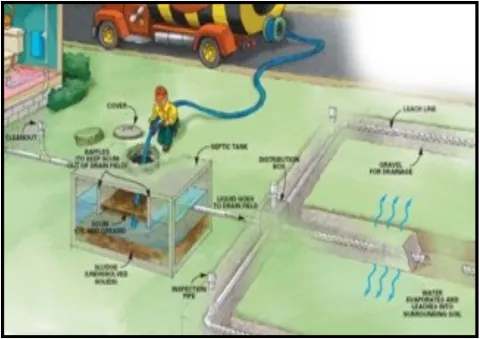
Therefore, necessary MAINTENANCE activities help protect public health, including the OWNERS’ health, and the environment, and also help avoid costly system replacement.

Inspections
Where individual pretreatment components are located at individual residences or establishments, INSPECTIONS should be performed as required for the septic tank, ATU, or other component. A rotating schedule of INSPECTIONS could be implemented to spread out the time needed for completing one cycle of INSPECTIONS for all individual components.
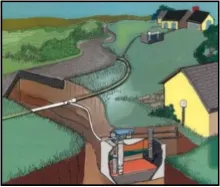
INSPECTION and MAINTENANCE requirements will depend on the types of pretreatment and soil dispersal components. However, INSPECTIONS of the shared components of a cluster system should be conducted at least quarterly or more often as needed. As the size of a cluster system increases, more frequent INSPECTIONS and service are required. Please refer to the appropriate component chapters of this manual for general INSPECTION and service requirements.
As noted above, collection systems may be conventional gravity or alternative types. A collection system INSPECTION should include assuring:
- Flows are within normal limits;
- There is no evidence of damage, overflow, leaks, backup, or blockage;
- There is no evidence of infiltration;
- All inspection/service points are accessible and secure from unauthorized entry;
- Pumps and other equipment, if any, operate properly.
Note: for any INSPECTION and MAINTENANCE program to be effective, the locations of all access points and connections must be accurately recorded.
Cluster systems often make use of devices to remotely monitor a number of system parameters. Alerts from a monitoring system may help catch a developing problem early and reduce the potential for a system failure or interruption. Remote monitoring can be cost effective for cluster systems and improve system performance.

Cluster System Management
The actual MAINTENANCE and service activities for cluster systems may be easier than the management structure required. Cluster system management needs to be more thoughtfully organized than the simpler management allowed for individual systems. For comparison, an individual onsite system OWNER is generally responsible for the system OPERATION and MAINTENANCE, including any repair or replacement that may become necessary. Because a cluster system may serve any number of individual residences or establishments, it would be difficult, if not impossible, for one or more OWNERS acting individually to successfully manage a cluster system.
A form of legal and financial organization is needed to handle necessary management activities. The entity would be considered a RESPONSIBLE MANAGEMENT ENTITY (RME). An RME may manage one or more cluster and/or individual wastewater treatment systems. RME’s may include various private, public, or non-profit entities. Regardless of the type of entity, the legal and financial organization must provide for OWNERS to fairly share the cost of MAINTENANCE and funds for major repairs.
Failure to properly organize management could result in unacceptable system MALFUNCTION and risks to public health and the environment.
The US EPA established five management models for onsite and cluster wastewater systems; see a summary in the Management Models section of this manual. Model V, RME ownership is recommended for cluster systems. Model IV or a combination of the two models could be used where an RME manages individual systems or components that are owned and located on the individual OWNER’S property.
The activities of an RME under Model V include:
- Participate in system selection, planning, and design;
- Inform system OWNER/users of proper system use and prohibited uses;
- Employ or contract with registered/qualified service professionals;
- Operate, maintain, and repair system to assure required performance;
- Retain system INSPECTION and service records.
Do’s and Don’ts
In addition to the Dos and Don’ts noted in the various component chapters, for cluster systems there is one important OWNER/user requirement:
Follow any and all RME recommendations or requirements regarding the care and use of a cluster system.